
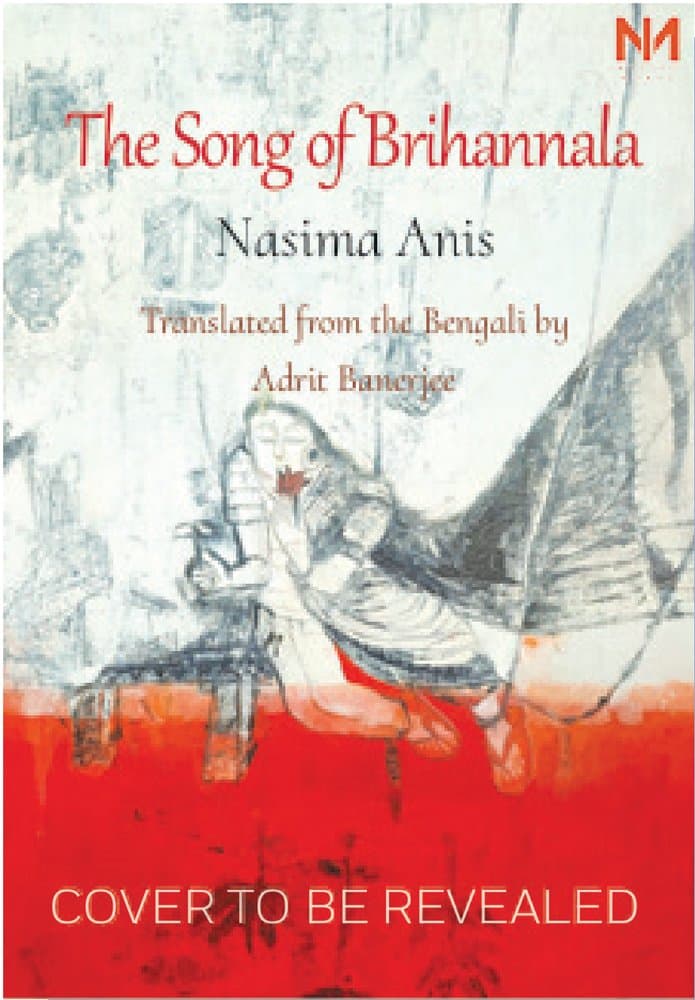
The Song of Brihannala
Nasima Anis
Translated by Adrit Banerjee
Following Zahi, an intersex protagonist, this powerful novel traces a transMuslim life in Bangladesh from birth, confronting trauma, identity, and resilience with intimacy and depth.
Full Synopsis
Nasima Anis's Brihannala Brittwanta (2012), translated into English as The Song of Brihannala, is a powerful exploration of transMuslim lives in Bangladesh. Following Zahi, the novel's intersex protagonist, the narrative traces a journey from birth with remarkable poignancy and depth. It is both intimate and expansive, confronting trauma, identity, and resilience while amplifying voices too often silenced. A perfect read for researchers and lovers of literary fiction.
Rights.aboutAuthorHeading
Nasima Anis (b. 1962, Chandpur, Bangladesh) studied Bengali at Chattogram College and Chattogram University. Her literary career began with the short story Dil, and her debut novel Mohinir Thaan won the Tarun Kathasahitya Puraskar in 2006. She later received the Dainik Samakal Nabin Kathasahitya Puraskar (2009), the Mohammed Nasiruddin Sahitya Puraskar (2020), and the Ranajit Biswas Abhishek Smriti Sammanana (2021). With fifteen published works spanning novels, short stories, and children's literature, Nasima now devotes herself fully to reading and writing after a thirty-year teaching career.
Excerpt
... And the incident occurred quickly—within two years, while returning home, when zie was walking through the mango grove, with hir classmates, greedily throwing stones at the ripe fruits hanging low over their heads. And if they could lay their hands on a fruit or two, 3 duping the guards, they devoured it right then and there. Soon after, as they gather to urinate, taking their little penises out, the catastrophe strikes. While others stand peeing, Zahi squats on the ground like a girl. Before this, zie had already earned the title of maigya from the girls of his class. Now, Bilash, the naughtiest of their gang, who was also older to them by two years, comes and stands near hir, as zie sits there peeing. He says, Tu magi naki re, why do you piss like this? And saying so, he pulls hir pants down. Unfortunately, that day, zie was wearing the shirt that had shrunk in size; otherwise, perhaps things could have been hidden a little longer. Nothing remains hidden anymore. As they bend down to examine but find nothing there, they say, Are you a girl, living in the guise of boys, buzz off! If we catch you again, wearing shirts, and hanging out in our midst, we would make you stand all naked on the field. Did Zahir not know that he had nothing? Zie knew, and that’s why zie never thought of himself as a boy—but that name, ‘Zahir Zahir’, at times, made hir oblivious. Until dusk, zie sits there, in that mango grove, where they had left him. ... Beyond the fields, flowed the Hisna, and across that river, lay the city. There in the city was the station. He would run away. No, zie wouldn’t see anybody’s face—especially those who are in hir school, never. Zie bursts into sobs, hiding his face in between his knees, as zie imagines how that cruel Bilash would inform everyone tomorrow, He is a maigya, a girl, or kichu nai…he has got nothing…nai nai. Yes, zie will run away, zie absolutely will. But as hir mother’s face arose in hir mind etched by the strong winds and rain, zie lost all his resolve. I don’t have the nerve, I cannot escape! ... But Zahir continues with his relentless efforts to preserve his place at home—even trying to carry his younger sister, on his lap, throughout the day, although with much difficulty as zie was comparatively weak for his age. Now that zie had started wearing those jama-pajamas again, a certain soft charming grace too blossomed forth. Zie felt happy, deeply satisfied, 4 with his own appearance. As his aching desire to become a girl began to surprisingly manifest both within and out, it pleased the human in him. Now, zie could check himself in the mirror openly, dress up as zie wished, and comb hir hair whenever zie wanted to. The neighbours, and even his mother, would now often call him Zahi. Zahirer lingantor Zahi. A masculine noun transformed into feminine; Zahir transitioned, became Zahi.