
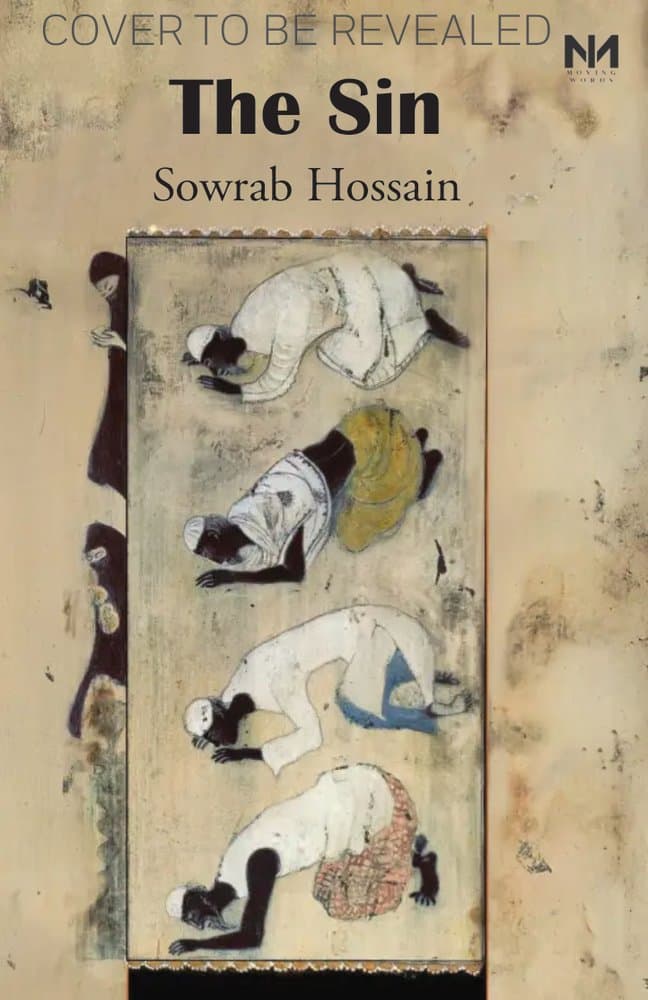
The Sin
Sowrab Hossain
A profound narrative built around the complex relationship between faith, devotion, and sin in the lives of people ravaged by drought — where nature, religion, and human life merge into one eternal quest.
Full Synopsis
Against the backdrop of drought-stricken Bengal, Paap explores the intersection of faith, devotion, and sin. Communities gather for the Istisqa prayer, pleading for rain, yet the narrative questions whether devotion alone can summon mercy. Hossain's prose weaves religion, nature, and human struggle into a timeless meditation on survival and divine justice.
Rights.aboutAuthorHeading
Sowrab Hossain is a rising Bengali novelist whose work blends local dialects and cultural textures with philosophical depth.
Excerpt
As the pupils of Keramat Fakir’s eyes sank into their sockets just before he died, the clouds seemed to sink into the sky’s cavity as well. Even the lungi he wore could not be hung on the line! The sun burnt the lungi as Surma baked a few loaves of bread in the pan. Dawood sat on the porch with his head buried between his knees. As the days passed, Dawood felt like he was becoming a three-headed man, worried about feeding five mouths. If he counted the two oxen, it would be seven mouths to feed. The burden of human sin had increased so much that Allah had withdrawn His mercy from the world. Why else were there no clouds gathering in the sky? Dawood was troubled by this. He had no land to call his own; if he included the steep hill and the tiny estate, it would total fifteen kathas, all inherited from his father and grandfather. Despite working tirelessly, he had not increased it by a single katha. All his earnings went to feeding those mouths. Dawood worked as a farmer in someone else’s field, always accompanied by his pair of oxen. Three lives were involved in plowing the land to prepare it for cultivation, meaning Dawood was a hereditary farmer in Nashipur Village. He shouldered the plow at Fajr and returned home after Asr. By the time he got back, his body felt half dead. The dark color of his skin seemed to have been smeared with more pot-ink. He was twisted like a coconut husk, and his hollow eyes blinked incessantly. He looked pale, as if the soil had absorbed all his blood. Dawood’s body seemed to have shrunk, much like a towel soaked in water and squeezed dry, clinging to his bones. At night, his lap-laden daughter, Rukhsana, lay on his chest and counted his bones. During these moments, Dawood would tell her that these were the poles holding up their bellies. If those poles broke, t heir rice would become sinful. In reality, an entire laborious day was tied to Dawood’s torso, the very same day that provided the rice for their meals and sustained his worldly life. Occasionally, he would lift his head from his knees, look toward the sky, mumble something, and then immediately bury his head back down. Was there no one he could curse in the sky? There wasn’t even an angel from Allah’s court to note his woes, no one to whom he could open his heart. Dawood’s circumstances were such that he felt he could neither plead nor beg to any angel or spirit in heaven. He would simply stand up straight and voice his complaints about his situation. Was the world created for humans to enjoy for free? The world belonged to everyone— Allah, Shaitan, Djinn, and Angels—so why should humans suffer alone?